Panama City Beach gives anglers several very different ways to spend a morning on the water. You can cast from the sand, pay for a day on a pier, explore the bay with a guide, or head toward offshore reefs with a licensed captain. The best option is not always the farthest run. It is the one that fits your group, budget, equipment, and comfort on the water.
This fishing guide to Panama City Beach covers the practical choices first: where to go, which access fees or licenses may apply, what fish are commonly targeted, and what to confirm before you leave. Fishing conditions and harvest rules change, so use this guide to build the plan, then check the official links for the date of your trip.
Key takeaways
- Choose the method before buying gear. A licensed pier or charter is easier for many visitors, while surf fishing offers more flexibility when you already have the right setup.
- Fish presence is not the same as an open harvest season. Check current FWC rules for the exact species, water, size, bag limit, and date before keeping a catch.
- Conditions control the day. Beach flags, wind, waves, thunderstorms, and the captain's call matter more than an itinerary written weeks earlier.
- A few clear questions prevent expensive surprises. Confirm licenses, equipment, trip length, fish cleaning, cancellation terms, and child policies before booking a charter.
Panama City Beach Fishing: The Right Way to Get on the Water
Start with the experience you want, not a promised species. A bay trip feels different from a long offshore run, and a sunrise surf session requires different preparation from a pier visit.
There is no guaranteed catch in any category. Water clarity, temperature, tide, bait movement, wind, and fishing pressure all shape the bite.
Panama City Beach Fishing Spots: Where to Cast?
Russell-Fields Pier
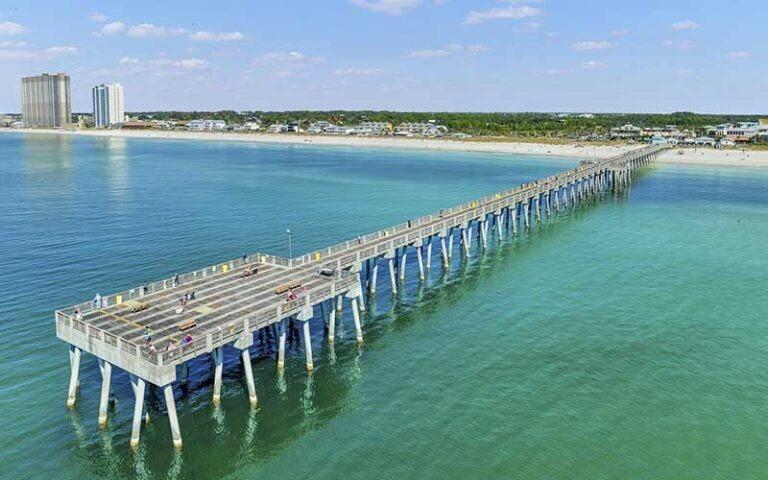
Russell-Fields Pier reaches into deeper water beside Pier Park and is open 24 hours a day, 365 days a year unless a schedule change is posted. At publication, daily fishing admission is $7, spectator admission is $4, and children age six and younger enter free.
The city's official page lists seasonal possibilities such as pompano, Spanish and king mackerel, redfish, flounder, sheepshead, cobia, and others. Those are possibilities, not promises. The pier's bait shop is currently listed as closed, so bring supplies or confirm another plan before arrival. City pier passes are honored at M.B. Miller County Pier.
Source: Enjoy Florida
M.B. Miller County Pier
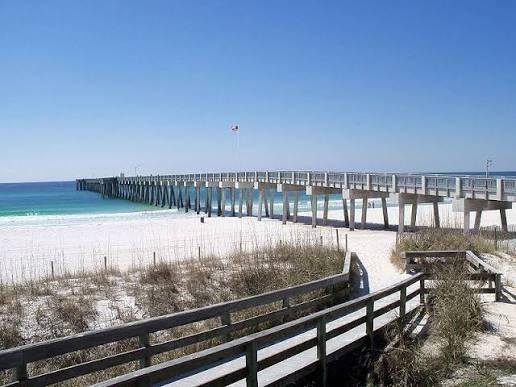
M.B. Miller County Pier, also called County Pier, offers another long pier on Front Beach Road. It is a practical alternative when your lodging or day's route makes the central beach area easier than Pier Park.
Check Bay County's current fee and parking information before leaving. Parking arrangements and operating details have changed in recent years, so an older vacation blog is not a reliable source for the day's total cost.
Source: Bay County
St. Andrews State Park
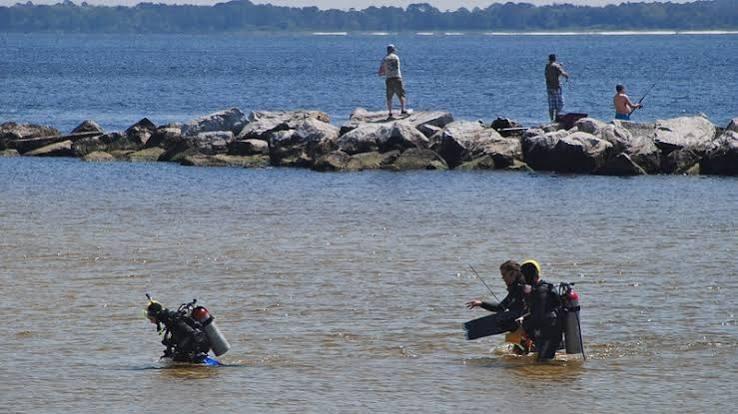
St. Andrews State Park supports surf, jetty, and lagoon side fishing. The park is open from 8 a.m. until sundown. Current admission is $8 per vehicle for two to eight people, $4 for a single occupant vehicle, or $2 for a pedestrian or bicyclist.
The jetty rocks and moving water require sound footing and attention to current. The park states that a Florida saltwater fishing license is required, and every catch must follow current size, number, method, and season rules.
Source: Florida Hikes
Public Beach Access for Surf Fishing
Public beach access gives surf anglers flexibility, but not every access has the same parking, restrooms, or space. Look for an area where you can cast well away from swimmers, keep hooks and line controlled, and move if the beach becomes busy.
Check the Panama City Beach flag system before leaving. Double red flags mean the water is closed to the public, so do not wade out to cast. A red or yellow flag also calls for extra caution around surf and currents.
St. Andrews Bay and Grand Lagoon
St. Andrews Bay, its connected waterways, and Grand Lagoon support inshore fishing for species commonly including redfish, speckled trout, flounder, and sheepshead. These waters are often the starting point for inshore guides, smaller boats, and some kayak trips.
Protected water can still become rough, especially near passes, channels, and afternoon storms. Use a guide if you do not know the water, and check the National Weather Service Tallahassee marine page for the bay, nearshore, and offshore forecast that matches your route.
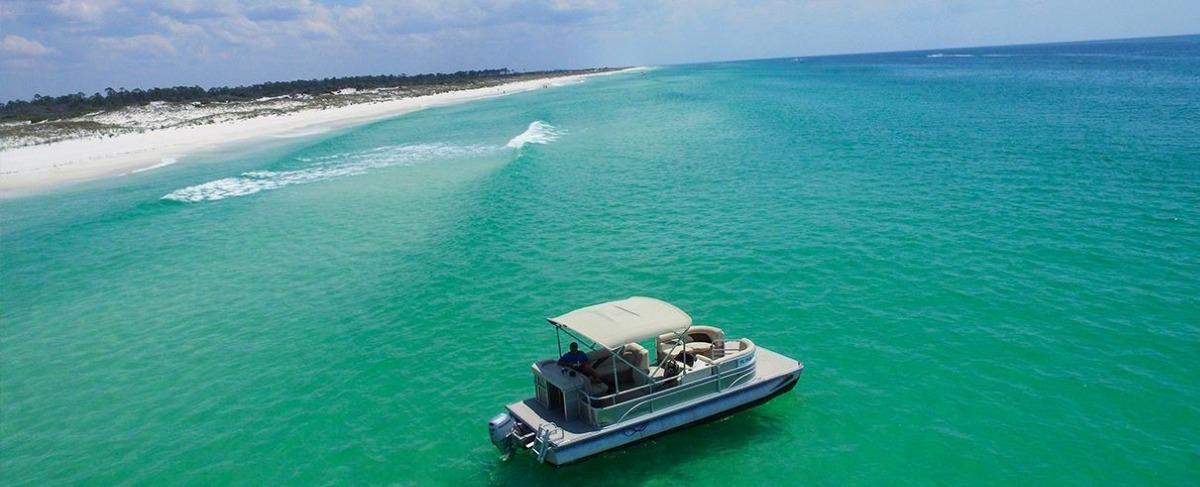
Youth Fishing Pond
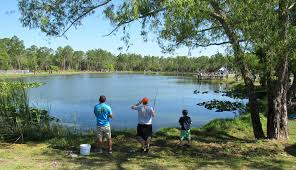
The Youth Fishing Pond at Frank Brown Park is a freshwater option for children age 16 and younger. It does not charge a separate fishing fee. Adults may fish only when accompanied by an eligible child, and adults need a valid Florida freshwater fishing license.
Bring your own equipment and check the posted rules. This is a useful first cast option when a family wants a shorter outing away from surf and boat motion.
Source: PCB Gov
Artificial Reefs for Experienced Private Boaters
Bay County has an extensive artificial reef network, but coordinates and site conditions matter. Experienced boaters can use the FWC artificial reef locator or Bay County's current reef resources to locate popular fishing spots. FWC notes that reef material can move, degrade, become buried, or have uncertain historical location.
Treat coordinates as one part of the plan. Weather, fuel range, vessel capability, navigation, legal seasons, and reef release equipment still need separate checks.
Pier Fishing Panama City Beach: What To Know Before You Go
Pier fishing removes the boat from the equation, but it still rewards preparation. Bring a rod suited to the target and conditions, terminal tackle, bait, pliers or a dehooking tool, a ruler, sun protection, drinking water, and a cooler if you intend to keep a legal catch. Ask the ticket office whether the pier license covers you that day and whether gear or bait is available.
Give neighboring anglers room and follow the pier's rules about rods, carts, nets, and fish handling. If someone hooks a large fish, be ready to lift lines and let the angler move. A landing net or pier gaff may be needed for certain legal catches, but staff and experienced anglers can explain what is permitted.
Early and late hours can be more comfortable in warm weather, but never assume the bite.
Surf Fishing Panama City Beach: A Simple First Setup
Surf fishing is appealing because the schedule is yours. For a first attempt, keep the system small: one suitable surf rod, a secure sand spike, a simple bottom rig, weights matched to the current, legal bait, pliers, and a measuring device. A local tackle shop can help match the setup to current surf conditions without filling the cart with gear you will not use.
Choose an uncrowded stretch of public beach and look before every cast. Never cast across swimmers, walkers, another line, or a marked swimming area. Keep loose line, hooks, and bait out of the walking path, and remove every piece of tackle when you leave.
Pompano, whiting, redfish, and other species are popular surf fishing catches. Check the species rules before keeping anything, even when another angler identifies the fish for you.
Inshore Fishing Panama City Beach: Bays, Flats and Kayaks
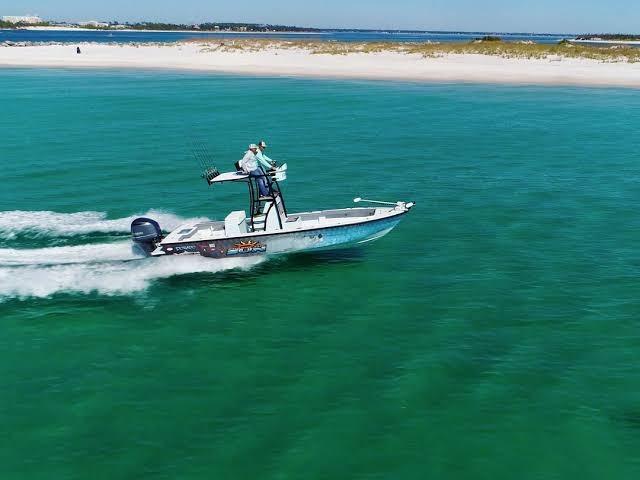
An inshore trip is often the easiest boat based introduction for families. The run is generally shorter than an offshore trip, and the water may be more protected. Redfish, spotted seatrout, flounder, sheepshead, and seasonal visitors are common targets.
A licensed guide adds more than a boat. The guide chooses water that fits the conditions, supplies appropriate tackle, explains technique, and handles fish safely. Tell the operator if anyone is new to casting, has limited mobility, or is especially concerned about boat motion.
Kayak fishing offers access to shallow water, but it is not the automatic beginner option some may asuume. Wind, current, boat traffic, heat, lightning, and a long paddle back can change the risk quickly. Use a properly fitted PFD, carry communication and signaling equipment, have a float plan, and stay within your ability.
Source: Panama City Beach Inshore
Deep Sea Fishing Panama City Beach: Nearshore Reefs and Offshore Water
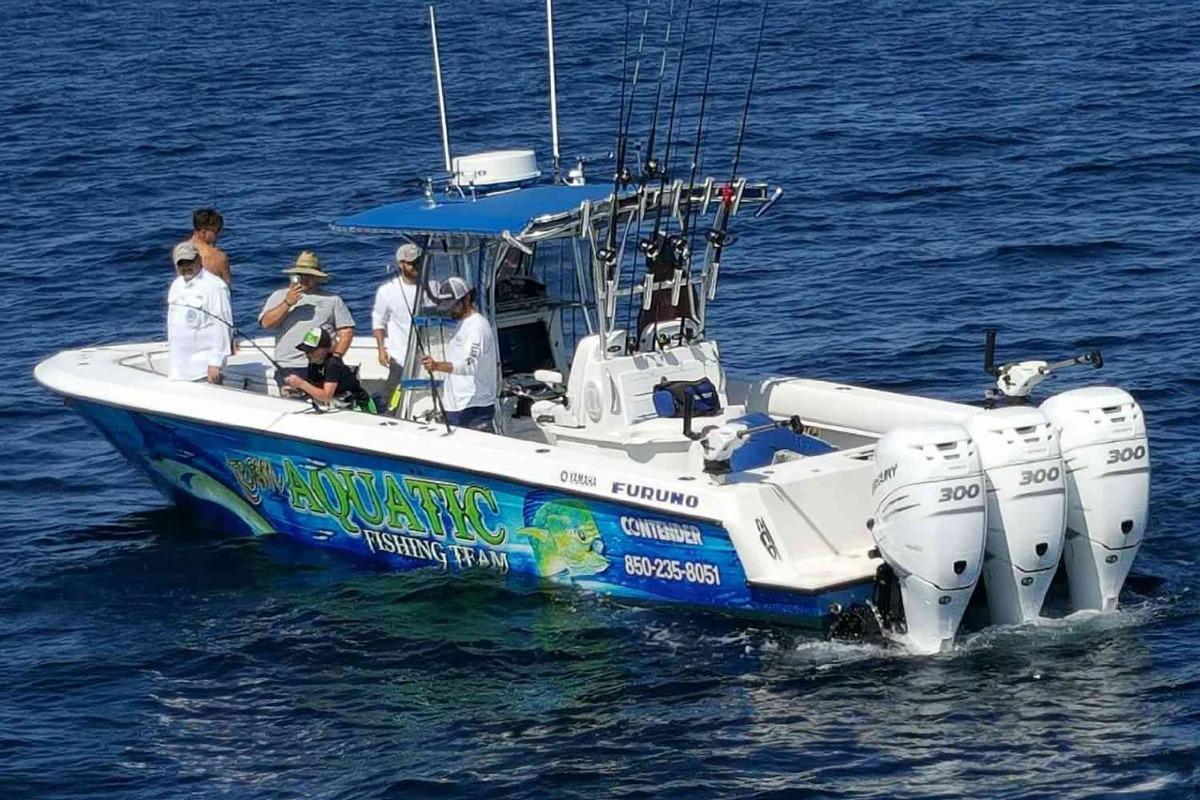
"Deep sea" can describe trips with very different time, distance, and price. A shorter nearshore trip may focus on trolling or reef structure closer to the pass. A longer offshore trip can reach deeper reefs, wrecks, and open water targets, but travel time can be a significant portion of the day and sea conditions have more influence.
Commonly discussed targets include red snapper, grouper, amberjack, king mackerel, mahi-mahi, wahoo, and other reef or pelagic species. What the boat can legally keep depends on the date, location, permit type, size, bag limit, and current closures. A reputable captain should set expectations around the legal options for that trip, but cannot promise a cooler full of one species.
If anyone is prone to motion sickness, ask a medical professional or pharmacist about appropriate options before the trip. Follow the product directions and the captain's arrival instructions; waiting until the boat is offshore is often too late to make the day comfortable.
Source: Fun PCB
Panama City Beach Fishing Charters: How to Choose
Compare charters by fit, not only price. Decide whether you want a private boat or shared party boat experience, how many hours the group can handle, and whether the priority is teaching children, light tackle inshore fishing, reef fishing, or a longer offshore run.
Read recent reviews for communication, safety, cleanliness, and how the crew treats beginners. Confirm that the operator holds the licenses and permits needed for the planned water and target. Weather cancellations are normal in coastal fishing; clear terms matter more than a promise that every trip will leave the dock.
Questions to ask before booking
- Is this a private charter or a shared trip, and how many fishing passengers are allowed?
- What part of the trip is expected to be travel time?
- Which fishing license or vessel permit covers paying passengers?
- Are rods, tackle, bait, ice, and fish cleaning included?
- Which species and fishing style fit the date without guaranteeing a catch?
- Does the boat have shade, seating, a restroom, and properly sized life jackets?
- What are the minimum age and mobility requirements?
- What food, drinks, sun protection, and motion sickness preparation should guests bring?
- How are weather cancellations, rescheduling, deposits, and gratuities handled?
Put the answers in writing when possible. That gives the group one clear packing list and avoids mismatched expectations at the dock.
What fish are in season in Panama City Beach?
There is fishing potential throughout the year, but "in season" can mean two things: the fish may be present, or harvest may be legally open. The overview below describes common seasonal patterns, not legal permission to keep a fish.
Before keeping a catch, identify it confidently and check the FWC saltwater recreational regulations. Regulations can differ between state and federal waters and between private recreational and federally permitted for hire trips.
Panama City Beach fishing license and 2026 regulations
The License Answer in 60 Seconds
Florida residents and visitors generally need a fishing license when attempting to take fish, including catch and release, unless a specific exemption applies. A licensed saltwater pier can cover people fishing from that pier, and a properly licensed charter or party boat can cover its paying passengers.
At publication, a Florida resident annual saltwater license is $17. The no cost resident shoreline only license is valid from land or a structure fixed to land, not from a vessel or a shoreline reached by vessel. Nonresident saltwater licenses are currently $17 for three days, $30 for seven days, or $47 annually. Nonresidents do not qualify for the no cost shoreline license.
Children under 16 are exempt from the license requirement but still must follow gear, size, bag, and season rules. The senior exemption applies to Florida residents age 65 and older with the required proof, not automatically to visiting seniors. Review the FWC license exemptions before relying on an exception.
Private Boat Reef Fishing Requirements
Private vessel anglers targeting certain reef fish need the free annual State Reef Fish Angler designation, including some people otherwise exempt from a standard license. Reef fishing gear rules also require the correct non stainless circle hooks when fishing with natural bait, a dehooking tool, and a descending device or venting tool rigged and ready for use.
Read the current FWC reef fish gear rules before departure. Released fish showing barotrauma need proper treatment before release; bringing the tool without knowing how to use it is not enough.
The 2026 Gulf Red Snapper Season
FWC lists a 140-day 2026 Gulf private recreational red snapper season. It includes daily harvest from May 22 through July 31 and September 1 through October 4, followed by selected weekends and holidays through January 4, 2027. The current minimum is 16 inches total length with a daily bag limit of two per person, included in the state snapper aggregate.
Use the FWC snapper page for the complete date list and last-minute changes. Federally permitted for hire vessels can follow a different season, so ask the captain which rules govern the trip.
Shore-Based Shark Fishing Has Extra Requirements
Anglers age 16 and older attempting to take sharks from shore, including beaches, jetties, bridges, and piers, need the free shore-based shark fishing permit after completing the required education course. FWC states that there are no permit exemptions, even for people exempt from the normal fishing license requirement.
Shark fishing also carries species, gear, landing, photography, and release responsibilities. Do not treat it as an improvised beach activity. Review the current FWC course and rules before selecting gear or location.
A Practical Fishing Day Checklist
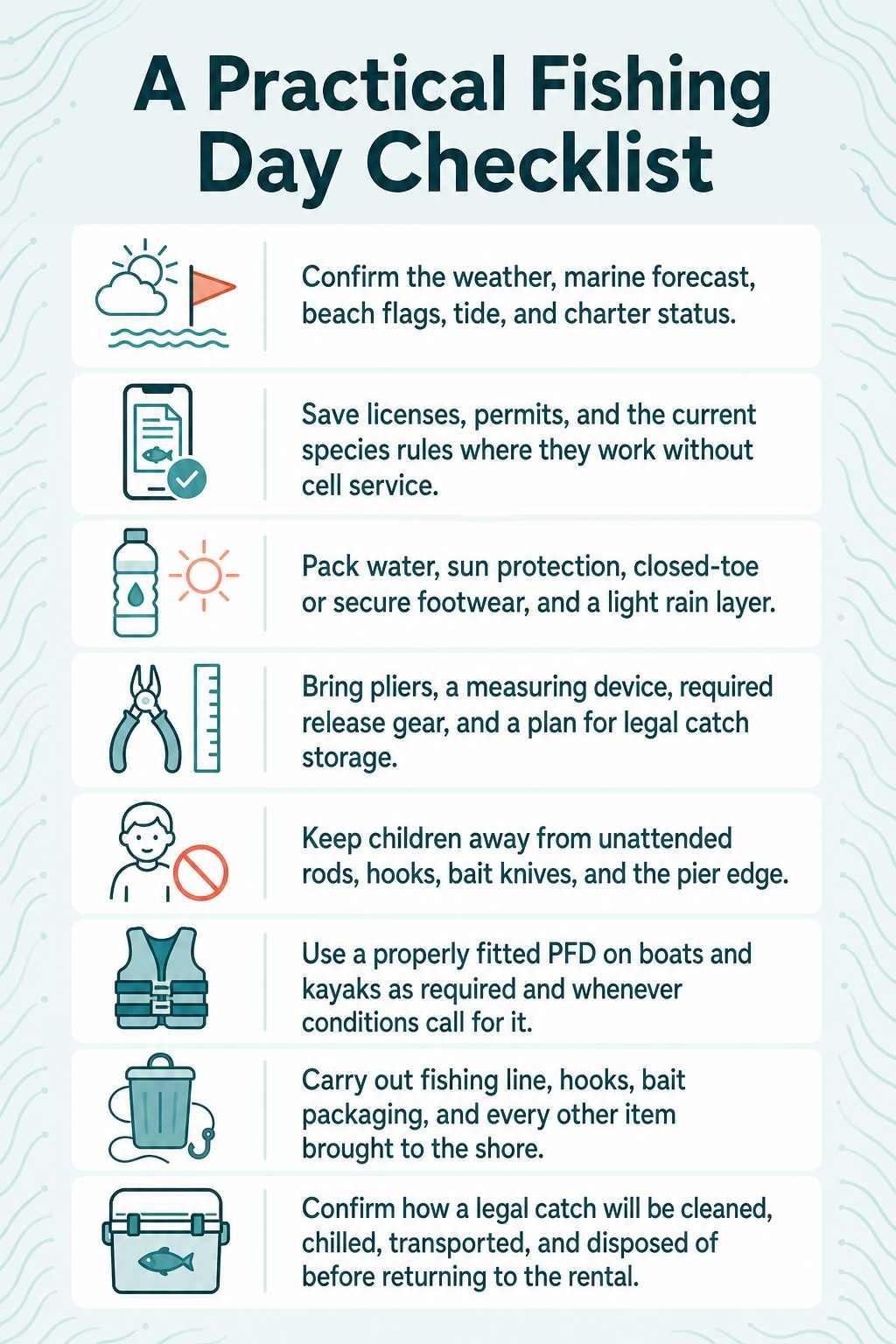
When the forecast turns, move the fishing day. A pier, beach, or offshore plan is not worth forcing through lightning, closed water, or unsafe seas.
Where to Stay for a Panama City Beach Fishing Trip
Match the location to the plan. The west and central areas work well for Pier Park, Russell-Fields Pier, M.B. Miller County Pier, and western beach access. The east end gives easier access to Grand Lagoon, St. Andrews State Park, marinas, and many charter departure points.
If the trip mixes fishing with ordinary beach time, prioritize a comfortable layout, a practical parking plan, and enough room to organize personal gear without blocking walkways. Do not assume a resort allows fish cleaning, bait storage, boats, trailers, or oversized carts. Check the individual property and association rules before booking.
SoCo manages condos, townhomes, and homes across different parts of Panama City Beach. Explore available SoCo stays by date and location, then compare the confirmed property details with your chosen pier, park, marina, or public access.
Frequently Asked Questions
Do I need a fishing license to fish from the beach in Panama City Beach?
Most nonresident visitors need a Florida saltwater fishing license, including when fishing on a catch-and-release basis, unless a specific exemption applies. Florida residents who fish only from shore can obtain a no-cost shoreline saltwater license, but it does not cover fishing from a boat or from shoreline reached by boat. Check the current Florida Fish and Wildlife Conservation Commission requirements before your trip.
Does Russell-Fields Pier admission include a fishing license?
Fishing from a licensed saltwater pier generally does not require a separate individual license, but confirm coverage at the ticket office when paying admission. Russell-Fields Pier is a weather-dependent outdoor option near Pier Park that works well for families, couples, and anglers. Check the pier’s current hours, fees, and operating information before heading out.
Where should beginners and families go fishing?
Russell-Fields Pier offers a flexible introduction to saltwater fishing without committing to a boat trip. Families with younger anglers can also consider the Youth Fishing Pond at Frank Brown Park, while a private inshore charter can provide more hands-on instruction. Before booking a charter, ask about minimum ages, child-size life jackets, shade, seating, restroom access, and trip length.
Can I fish at St. Andrews State Park or Camp Helen State Park?
Yes. St. Andrews State Park on the east end offers shoreline, jetty, and lagoon-side fishing during suitable weather. Camp Helen State Park, near Lake Powell on the west end, provides fishing alongside trails, kayaking, and a quieter natural setting. Entrance requirements, fishing access, and license rules differ, so check each park’s current information before visiting.
When is the best time to fish in Panama City Beach?
Fishing opportunities are available throughout the year. Spring and fall are popular for migratory surf and pier species, summer opens more nearshore and offshore possibilities, and winter can produce inshore and cool-season catches. The best time for your trip depends on the target species, legal harvest season, weather, water conditions, and chosen fishing method.
Are fishing charters canceled when the weather is bad?
Captains may cancel, shorten, reschedule, or adjust a trip when conditions on the gulf are unsafe. Review the operator’s weather, deposit, refund, and rescheduling policies before booking. Keep a backup activity available in case wind, thunderstorms, or rough water affect the day.
Can I keep every fish I catch?
No. Whether a fish can be kept depends on its species, size, bag limit, harvest season, location, gear, and applicable permits. State and federal rules can also differ. Identify the fish confidently and check the current FWC saltwater regulations before keeping it.
Make the Fishing Day Easy from the Start
A successful Panama City Beach fishing day begins before the first cast. Pick the method that fits the group, verify the legal and safety details, and leave room for the weather to change the plan. The water decides what is possible; good preparation keeps that change from becoming a problem.
Choose your fishing access first, then see available dates with Southern Coast Vacation Rentals. With the right home base and a clear plan, the group can spend less time sorting logistics and more time enjoying the coast.